04 / Posture guide
Posture Chart: Good vs Bad Posture at a Glance
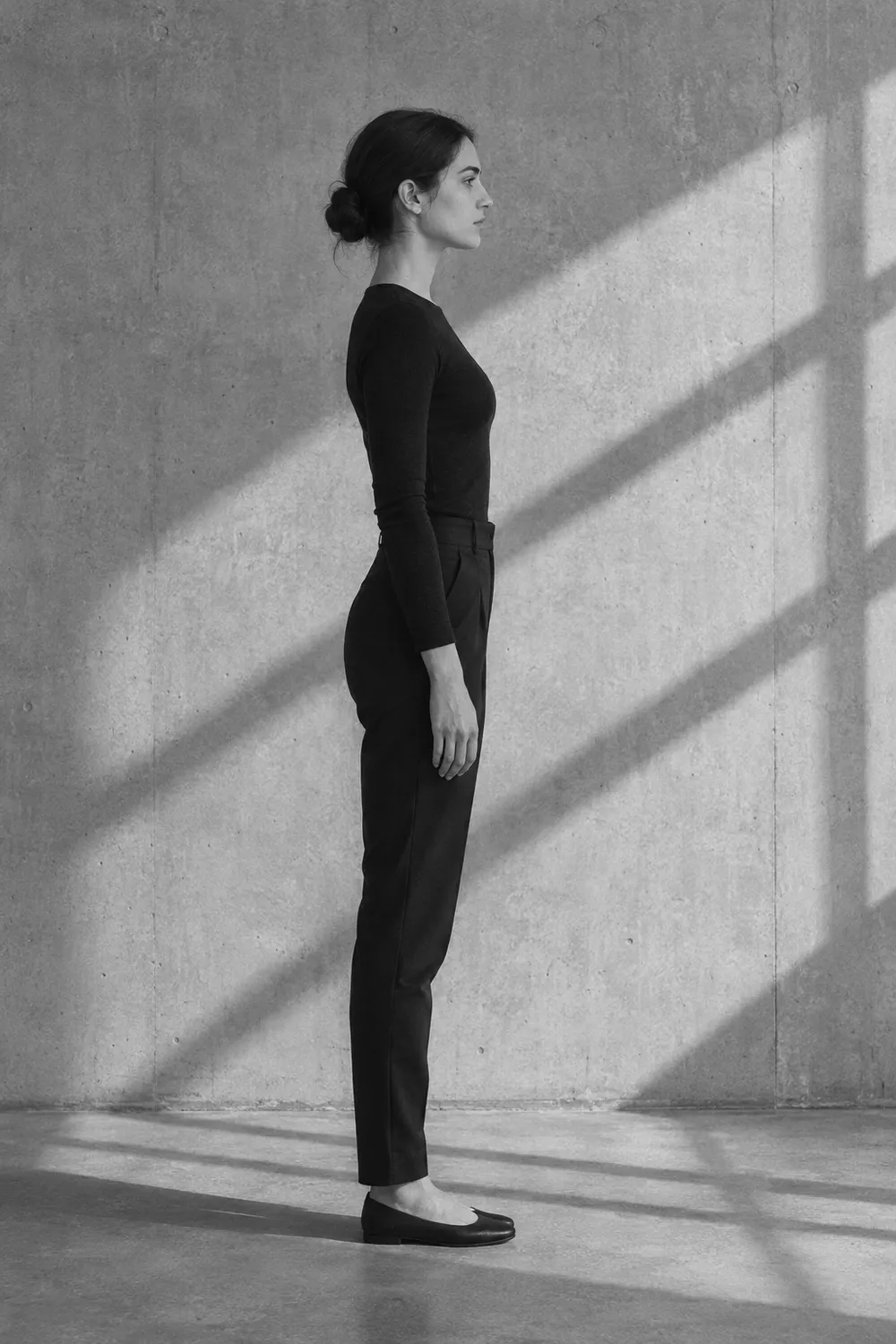
A posture chart is the fastest way to see what is going on in your own body. Check each point from head to feet against the chart, find the one or two faults you actually have, and fix those first. You don’t need to fix everything at once.
 Save this guide to Pinterest
Check yourself, point by point
- 01
Head
Good: from the side, your ear sits over your shoulder and your chin is level. Common fault: head pushed forward, chin poking out, usually from phones and screens.
Tip10-second fix: slide your chin straight back, as if making a double chin, then let it relax halfway.
- 02
Shoulders
Good: shoulders down and slightly back, level with each other, palms facing your thighs. Common fault: shoulders rounded forward, palms facing backwards.
Tip10-second fix: lift your shoulders to your ears, roll them back, then let them drop.
- 03
Upper back
Good: a gentle natural curve. Common fault: a rounded upper back that pulls your head and shoulders down with it.
Tip10-second fix: lace your hands behind your head, lift your chest towards the ceiling, breathe out and lower your arms.
- 04
Ribs
Good: front ribs sit flat over your hips. Common fault: ribs flaring forward, often from trying too hard to stand up straight.
Tip10-second fix: breathe out fully and feel your front ribs drop down and in. Keep them there as you breathe in.
- 05
Pelvis and lower back
Good: pelvis in neutral with a soft inward curve in the lower back. Common faults: a deep arch with the bottom pushed out, or hips pushed forward with the upper body leaning back (swayback).
Tip10-second fix: soften your knees, let your tailbone drop slightly and bring your hips back over your ankles.
- 06
Knees
Good: straight but soft, kneecaps pointing forward. Common fault: knees locked back, which tips the pelvis and pushes the hips forward.
Tip10-second fix: unlock your knees just enough that you could bounce.
- 07
Feet and weight
Good: feet hip-width apart, weight spread across the heel and the balls of the feet. Common fault: weight sitting on the heels or rolled to the outside of the feet.
Tip10-second fix: rock gently forward and back until your weight feels centred, then stop.
The posture chart
| Point | Good posture | Common fault | 10-second fix |
|---|---|---|---|
| Head | Ear over shoulder, chin level | Head forward, chin out | Chin back, then relax halfway |
| Shoulders | Down, slightly back, level | Rounded forward | Lift, roll back, drop |
| Upper back | Gentle curve | Rounded | Hands behind head, lift chest |
| Ribs | Flat over hips | Flaring forward | Breathe out, ribs down |
| Pelvis | Neutral, soft curve | Deep arch or swayback | Soft knees, tailbone down |
| Knees | Straight but soft | Locked back | Unlock slightly |
| Feet | Weight spread evenly | Weight on heels | Rock to centre |
How to use the chart
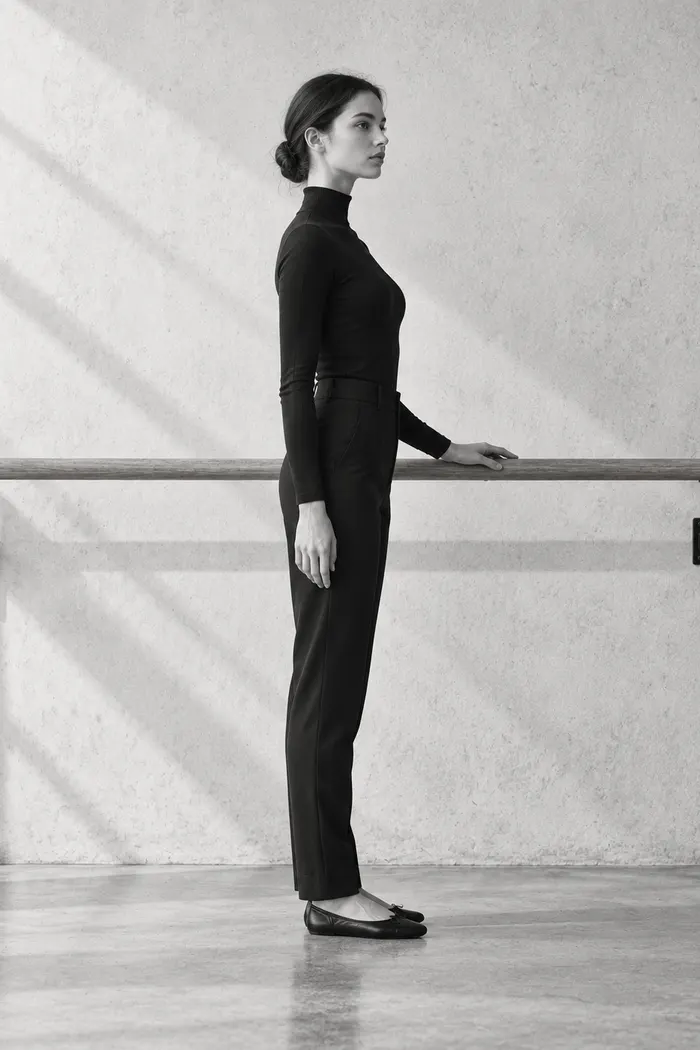
- Ask someone to take a side-view photo of you standing relaxed, or prop your phone at hip height.
- Go down the chart from head to feet and mark the points that don’t match.
- Pick the one or two highest on your body. Fixing the head and shoulders often fixes the rest.
- Do those 10-second fixes three times a day for a week, then take a new photo.
Good posture vs bad posture: what really matters
There is no single perfect posture. The chart is a reference, not a test. Good posture is a position you can return to easily, not one you hold all day. If a fix feels painful or forced, ease off; it should feel tall and easy.
Next steps
To find out which pattern your faults belong to, read the 4 types of posture or take the posture type quiz. To see the aligned position in detail, read the correct posture diagram. For the strength that makes it easy, try the daily posture routine.
Questions
What is a posture chart?
A posture chart compares good posture with the most common faults at each point of the body, from head to feet, so you can check yourself quickly.
How often should I check my posture?
Once a week with a side photo is enough to track progress. The 10-second fixes can be done several times a day.
Can bad posture be fixed?
For most everyday posture habits, yes, with regular practice over a few weeks. If you have pain, see a doctor or physiotherapist first.
Common mistakes
- Trying to fix all seven points at the same time.
- Pulling the shoulders back hard, which flares the ribs and arches the lower back.
- Lifting the chin to look taller.
- Checking posture only in the mirror from the front. Most faults show from the side.
- Holding good posture so stiffly you stop breathing.
Not medical advice. If you have pain, numbness or an injury, see a physiotherapist before you start.
Défilé · Alignment score
Check your posture on the move: film a walk in Défilé and see your alignment score.
Film a walk and Défilé scores it out of 100, shows you the one thing holding it back and gives you a short drill to fix it. Your video never leaves your phone.